
How Augmented Reality Is Changing the Way People Shop
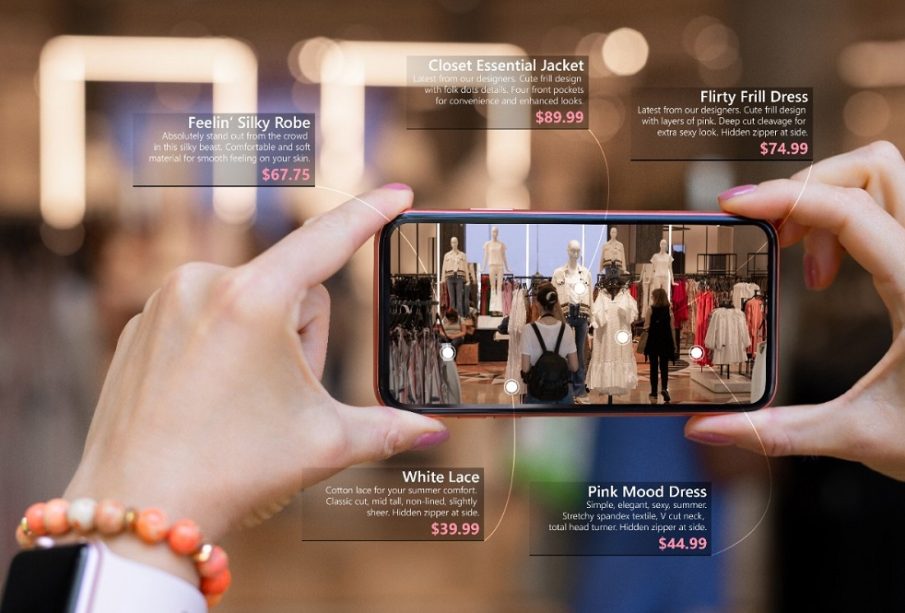
The retail industry is undergoing its most significant technological shift since the rise of e-commerce. For decades, online shopping offered unmatched convenience, yet it suffered from one persistent flaw: the inability for consumers to physically interact with products before purchasing them. Static images, product descriptions, and video clips could only bridge so much of the gap between a digital screen and reality.
Augmented reality technology is closing that gap entirely. By superimposing digital 3D models, graphics, and interactive information onto a user’s real-world environment through smartphones, tablets, or wearable glasses, augmented reality transforms online shopping from a passive visual experience into an interactive spatial one. From virtual beauty try-ons to spatial furniture placement, augmented reality is fundamentally changing consumer buying behavior, boosting retailer conversion rates, and reducing return volumes across the globe.
Overcoming the Imagination Gap in Digital Commerce
The primary friction point in traditional online retail is the imagination gap, the difficulty a customer experiences when trying to picture how an item will look, fit, or function in their personal space or on their body.
Uncertainty directly leads to cart abandonment, hesitation, and high return rates. Augmented reality addresses this challenge directly by providing real-time visual proof.
-
Virtual Product Placement: Furniture and home decor retailers allow shoppers to render true-to-scale 3D models of sofas, tables, or lamps inside their living rooms using smartphone cameras, eliminating guesswork regarding size, color harmony, and spatial fit.
-
Virtual Apparel and Accessory Try-Ons: Eyewear brands, jewelry designers, and clothing lines utilize facial tracking and body-mapping technology to let customers virtually wear glasses, watches, lipstick, or apparel before placing an order.
-
Interactive Product Exploration: Consumers can rotate, zoom in on, inspect textures, and interact with complex electronic or mechanical goods, examining internal components or viewing features in action.
Driving Higher Conversions and Reducing Product Returns
For retail business leaders, augmented reality is not a gimmick; it is an effective engine for revenue growth and operational efficiency. Integrating immersive spatial visualization into digital storefronts directly improves core business metrics.
Boosting Customer Engagement and Sales Conversion
Shoppers who interact with augmented reality features demonstrate significantly higher engagement metrics compared to those viewing traditional media. Spending time manipulating a 3D model or testing different product variations fosters a sense of ownership, known in consumer psychology as the endowment effect.
When customers see a sofa placed accurately in their home or observe a shade of makeup applied to their skin in real time, purchase confidence rises sharply. Retailers implementing augmented reality regularly report double-to-triple-digit percentage increases in overall sales conversions compared to standard product pages.
Drastically Lowering Return Rates
E-commerce returns represent a massive logistical cost and environmental challenge for retailers. The leading reasons consumers return online purchases are inaccurate fit, unexpected sizing, and color mismatch.
By providing accurate, true-to-scale virtual previews, augmented reality minimizes post-purchase disappointment. Customers know precisely how an item looks and fits before it leaves the warehouse, drastically cutting return rates and saving retailers millions of dollars in reverse logistics, restocking fees, and damaged inventory costs.
Transforming the In-Store Physical Retail Experience
While augmented reality is revolutionizing e-commerce, it is equally transforming brick-and-mortar retail operations. Physical stores are deploying spatial computing to create hybrid, technology-enabled shopping environments.
Smart Mirrors and Digital Fitting Rooms
Clothing and cosmetics stores are increasingly installing interactive smart mirrors within physical fitting rooms and beauty counters. These mirrors capture a shopper’s reflection while overlaying alternative outfit colors, complementary accessories, or different makeup shades instantly, eliminating the need to physically change garments multiple times.
Smart mirrors can also display real-time inventory availability, recommend matching items from across the store, and allow customers to request different sizes directly from sales associates with a touch of the screen.
In-Store Navigation and Interactive Packaging
Navigating massive department stores, home improvement warehouses, or grocery aisles can be frustrating for shoppers searching for specific items. Augmented reality mobile apps provide indoor wayfinding overlays, drawing virtual navigation paths across the physical floor to guide customers directly to products on their shopping lists.
Additionally, brands are utilizing interactive product packaging. When a customer points their smartphone camera at a product label on a shelf, an augmented reality overlay reveals ingredient sourcing histories, tutorial videos, allergy alerts, customer reviews, or interactive promotional games.
Industry Sectors Leading the Augmented Reality Retail Wave
Different retail verticals leverage augmented reality in unique ways to solve specific customer pain points.
Home Furnishing and Interior Design
Home goods brands were among the earliest adopters of true-to-scale augmented reality. By combining camera depth sensors with environmental lighting estimation, furniture apps allow users to position realistic armchairs or dining tables on their actual floorboards, complete with natural shadow casting and texture rendering.
Beauty, Cosmetics, and Skincare
Cosmetics brands utilize precise facial landmark tracking to map lipsticks, foundations, blushes, and eyeshadows onto a user’s face via front-facing smartphone cameras. Advanced algorithms account for lighting conditions and individual skin tones, delivering hyper-realistic color matches that rival in-person store testing.
Footwear and Fashion Accessories
Footwear brands employ spatial tracking to map digital 3D shoes directly onto a user’s feet in real time. Similarly, luxury watchmakers and jewelry houses allow consumers to project intricate timepieces onto their wrists, providing a clear sense of scale, strap fit, and metal finish.
Key Technological Advances Accelerating Adoption
Several underlying technological developments have converged to make augmented reality shopping smooth, accessible, and hyper-realistic.
-
Web-Based Augmented Reality: Early implementations required users to download standalone mobile applications, creating friction. Web-based systems now run high-fidelity 3D renderings directly within standard mobile web browsers without extra app downloads.
-
LiDAR and Spatial Depth Sensors: Modern smartphones and mobile devices feature advanced light detection and ranging sensors, allowing precise room mapping, accurate scale measurements, and instant plane detection.
-
Artificial Intelligence and Real-Time Rendering: AI models enhance lighting estimation, material physics, and motion tracking, ensuring that digital fabrics drape naturally and metallic surfaces reflect actual ambient room light realistically.
Frequently Asked Questions
Do consumers need specialized equipment like headsets to use retail augmented reality?
No, the vast majority of retail augmented reality experiences are designed to run on standard modern smartphones and tablets using native camera hardware and web browsers. While specialized smart glasses and spatial headsets offer immersive experiences, mobile devices remain the primary access point for daily retail shopping.
How does web-based augmented reality differ from app-based augmented reality?
App-based augmented reality requires users to download a specific mobile application from an app store before accessing 3D features. Web-based augmented reality runs directly inside standard web browsers on a retailer’s website, eliminating download steps and making the experience instantly accessible to shoppers.
How accurate are augmented reality measurements for furniture placement?
When used on modern smartphones equipped with depth sensors or LiDAR technology, augmented reality spatial measurements are highly accurate, typically within a margin of error of less than one to two percent. This precision ensures that users can accurately gauge whether a piece of furniture will fit into a designated space.
How does augmented reality help reduce the environmental impact of retail?
Augmented reality reduces retail environmental impact by significantly lowering product return volumes, which decreases transportation emissions, packaging waste, and fuel consumption associated with reverse logistics. Additionally, virtual samples reduce the need for physical store display inventory and plastic packaging.
Can augmented reality tools accurately match makeup shades to different skin tones?
Yes, modern beauty try-on tools utilize advanced computer vision and artificial intelligence to analyze skin undertones, lighting conditions, and facial contours. This allows software to render cosmetics realistically across diverse skin tones and textures.
Is implementing augmented reality expensive for small and medium-sized e-commerce businesses?
While custom enterprise augmented reality development used to be cost-prohibitive, many modern e-commerce platforms now offer plug-and-play 3D modeling tools, standardized spatial integrations, and affordable subscription services, allowing smaller merchants to deploy augmented reality features easily.
What is the difference between augmented reality and virtual reality in retail?
Augmented reality superimposes digital 3D elements onto the real physical world through a screen or glass, allowing users to see their actual environment. Virtual reality completely replaces the physical world with a fully simulated, synthetic digital environment viewed through a closed headset.